Jigokudani Yaen-koen: the complete visitor guide
I live in Yamanouchi, the town the park sits in, and I have walked the trail up to it in every month of the year. Almost everything visitors get wrong happens before they arrive: the wrong month, or treating the last 1.6 km as a detail. The monkeys are the easy part. Here is the rest of it.
What the place actually is
Jigokudani Yaen-koen opened in 1964 in the Yokoyu river valley, inside Joshinetsu Kogen National Park, at an altitude of 850 m. The name means Hell Valley, and it is literal: steam vents out of the frozen valley floor, and in January that steam against a metre of snow is the whole scenery. Around 160 wild Japanese macaques use the park, and there is no enclosure. They come because it is fed and leave when they feel like it, which is why the park publishes a live monkey-appearance update rather than a guarantee.
The hot-spring pool was dug for the monkeys, and only they use it. People do arrive expecting to get in with them. You cannot. Human bathing happens down the hill at Shibu Onsen, a street of wooden ryokan and public baths that is worth a night of its own.
Why the monkeys get in the water
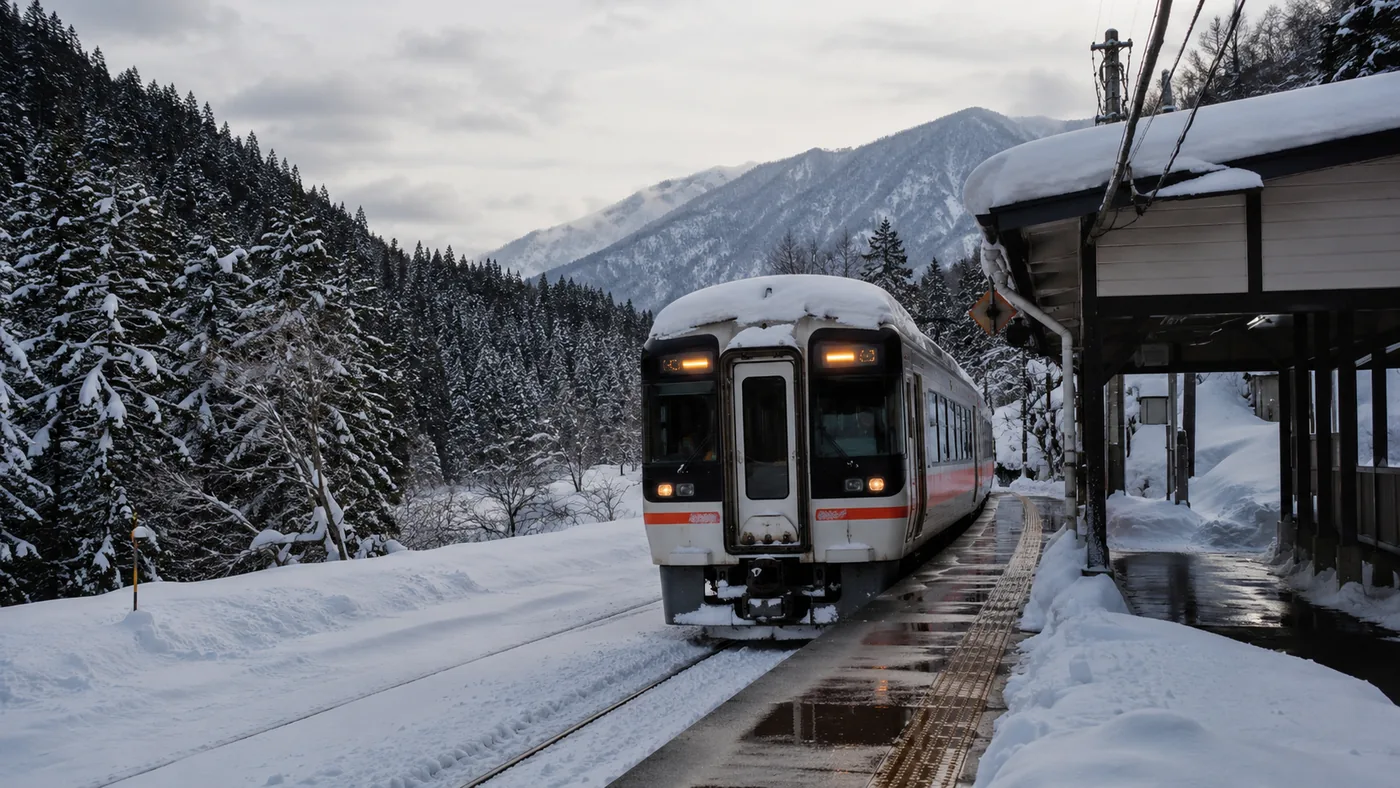
Japanese macaques are the northernmost-living non-human primate in the world. Snow covers the ground here roughly four months a year, temperatures drop to around −10 °C, and snowfall passes a metre. Sitting in a hot spring is a response to that cold rather than a party trick, and it settles your biggest planning question. Bathing is most reliable from about December to March and strongest in January and February. In April the troop is still here, but in the trees and along the river rather than in the pool.
The journey, and the part nobody photographs
Jigokudani is roughly 250 km from Tokyo. The Hokuriku Shinkansen from Tokyo or Ueno to Nagano takes about 80 to 110 minutes depending on the service. From Nagano Station you have two sensible options: Nagaden’s Snow Monkey Express bus from Bus Stop 23 at the East Exit, about 40 to 45 minutes direct to Kanbayashi Onsen, or the Nagano Dentetsu line to Yudanaka in about 45 minutes plus a short local bus. Nagaden sells a Snow Monkey Pass bundling its direct bus with park entry at ¥6,800 for an adult. Call the whole thing three hours one way.
Then comes the part that is missing from every photograph. From the Kanbayashi Onsen bus stop it is 1.6 km of unpaved forest path, 30 to 35 minutes each way, uphill overall. There are no vehicles, no shuttle and no step-free alternative, and whatever you carry up you carry back down. In winter the surface is packed snow and ice, and the steepest section is saved for the end. The park’s own advice to first-timers is hiking shoes in summer, snow boots in winter, and it recommends buying simple crampons in advance. I watch people arrive in February in trainers most weeks, and I watch them come back down very slowly.
The season trade-off, honestly
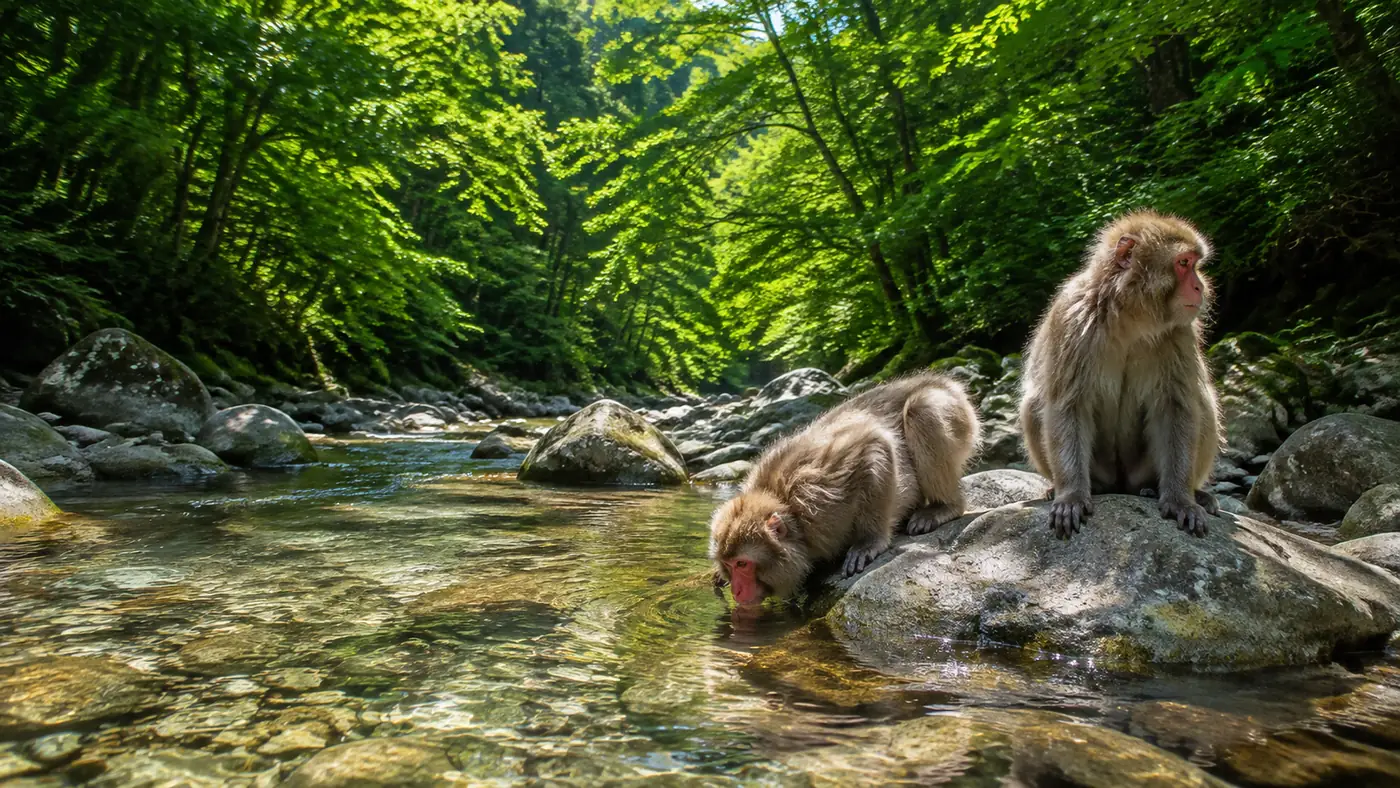
January and February give you the picture you came for and the worst conditions to get it in: ice underfoot, short daylight, and camera lenses fogging the moment you step somewhere warm. Late March keeps some of the cold behaviour with easier walking. Spring brings infants, which I find more interesting than the pool, and a trail you can manage in ordinary shoes. Summer is the weakest version: macaques in a green river valley, no steam, no snow, and a three-hour journey that suddenly feels long. Pick a month deliberately rather than feeling cheated by a postcard.
How to behave when you get there
The rules are short and they matter. Do not touch the monkeys and do not feed them. Do not take food out in the open: a visible snack is an invitation, and the macaque will win. Do not stare into a monkey’s eyes; a direct stare is a threat display in their language, and is read that way. Keep your distance and let them move around you. They are wild animals living their own lives in a valley that happens to have a viewing ground in it, and the arrangement only works because visitors behave like guests.
Admission is ¥800 for an adult and ¥400 for a child aged 6 to 17. The park opens every day, 8:30 to 17:00 from April to October and 9:00 to 16:00 from November to March. It has announced an online ticketing system from late August 2026, with advance purchase recommended in the busy winter months. Bring cash anyway. Small mountain operations here still run on it.
Who should book a tour instead of going alone
Doing this yourself is entirely reasonable. The park is public, the buses run to timetable and the signage is clear. I would still book a tour in three situations. First, if you are coming from Tokyo and back in one day in winter: the daylight is short, the margin between the last useful bus and the last shinkansen is thinner than it looks on paper, and one missed connection eats the trip. Second, if you are not confident on snow and ice, because a guide who walked that trail this morning knows what the last slope is doing today. Third, if you are travelling with people who need the day handled rather than negotiated, which usually means young children, older parents, or a group that will not move at one speed.
If none of that describes you, take the bus, buy your ¥800 ticket at the gate, and give yourself a couple of unhurried hours up there. The macaques reward standing still far more than arriving quickly. Either way, plan the day backwards from the last bus out of Kanbayashi.
Ready to book?
If you would rather not assemble the shinkansen, the bus and the timing yourself, the panel below shows what is running on your dates. If you would, read how the two options actually compare first — I am not going to pretend one suits everybody.
Frequently asked questions
Do I need to book anything in advance to see the snow monkeys?
Not to enter the park — you pay ¥800 at the gate, and the park has announced an online ticketing system from late August 2026. What is worth booking ahead is the journey, especially in January and February. See getting there from Tokyo.
What is the single most common mistake visitors make?
Footwear. People arrive at Kanbayashi Onsen in trainers and then meet 1.6 km of packed snow on a slope. The park itself recommends snow boots and simple crampons in winter — there is more on what to wear.
Will the monkeys definitely be in the hot spring?
No, and nobody can promise otherwise. They are wild and come and go as they choose. Bathing is cold-weather behaviour, most reliable from December to March. The park publishes a live update, and the month you pick matters more than the hour you arrive.